
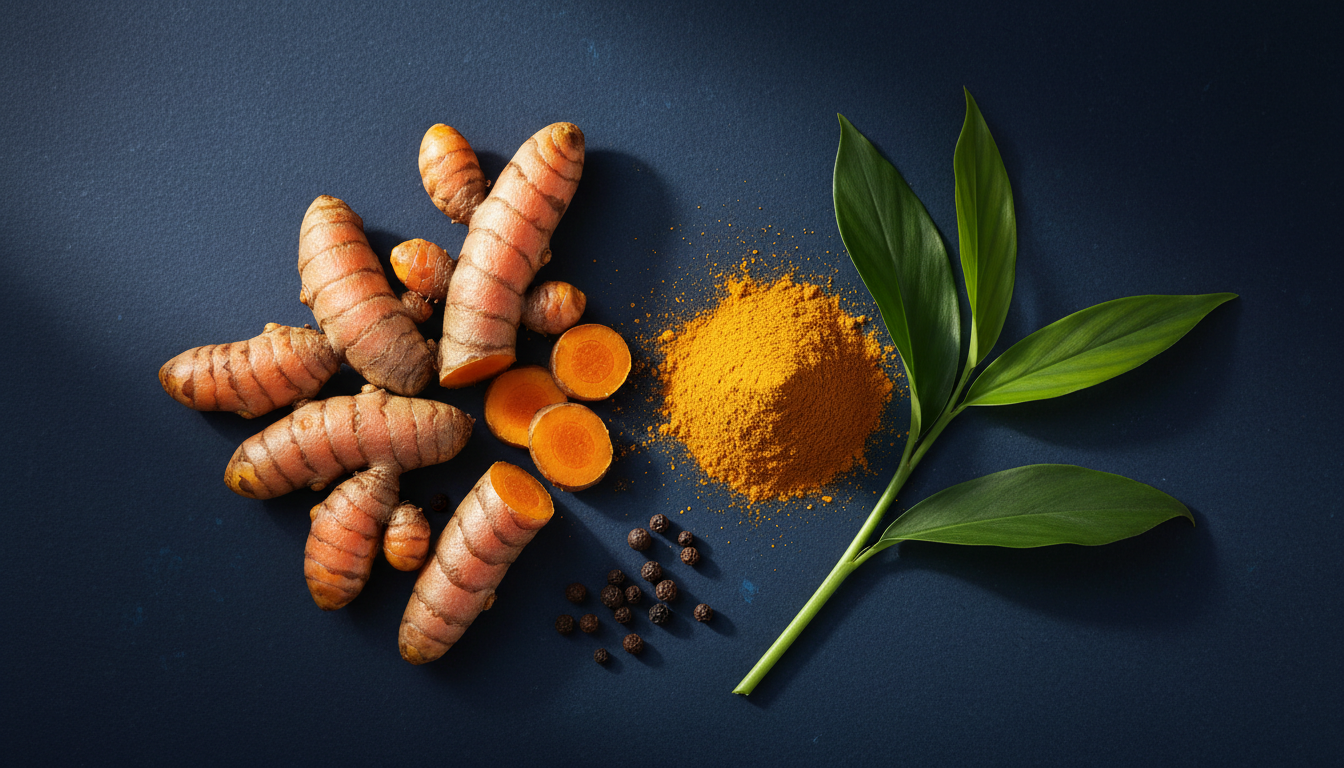
Curcumin, the compound that gives turmeric its golden color, has been the subject of thousands of laboratory studies in cancer. In cells and animals it acts on almost every pathway cancer depends on. Far fewer studies have been done in people, and the results there are more modest but real. This article reviews what curcumin does, the human trials, the absorption problem that limits it, and the safety issues every patient should know.
How Curcumin Acts on Cancer
Curcumin dampens NF-kappa-B and STAT3, two master switches of inflammation and cancer cell survival, and acts on dozens of other signaling pathways. At the University of Leicester, researchers tested it on cancer cells taken directly from patients’ colorectal liver metastases and found that it reduced the cancer stem cell populations that drive resistance and recurrence, both alone and combined with chemotherapy.1 Our article on why cancer comes back explains why those cells matter.
The Absorption Problem
Taken by mouth, curcumin is poorly absorbed and quickly broken down, so blood levels stay low. Several approaches try to overcome this: formulations bound to fats or phospholipids, nanoparticle forms, combination with piperine from black pepper, and intravenous administration. Piperine increases curcumin absorption, but it also slows the liver’s breakdown of many prescription drugs, including some chemotherapy drugs, which can raise their levels. That interaction deserves attention in anyone on cancer treatment.
What the Human Trials Show
Colorectal cancer (United Kingdom). In the CUFOX trial at the University of Leicester, 28 patients with metastatic colorectal cancer were randomly assigned to FOLFOX chemotherapy alone or with 2 grams of oral curcumin daily. Curcumin was safe and well tolerated. Median overall survival was 502 days with curcumin compared with 200 days without it.2 The trial was small, and the chemotherapy-only group did worse than usually expected, so the survival difference needs confirmation, but it was encouraging.
Breast cancer (Armenia). In a randomized, double-blind, placebo-controlled trial, women with advanced metastatic breast cancer received paclitaxel with intravenous curcumin or placebo. The curcumin group had a higher response rate and less fatigue.3 See our article on integrative treatment for breast cancer.
Pancreatic cancer (United States). In a phase 2 trial at MD Anderson Cancer Center, oral curcumin alone showed biological activity in some patients with advanced pancreatic cancer, including one patient whose disease stayed stable for more than 18 months.4
Where it did not help. In a randomized trial in familial adenomatous polyposis, an inherited condition that causes hundreds of colon polyps, curcumin did not reduce the number or size of polyps.5 Results for preventing radiation skin damage have also been mixed.
Safety Issues to Know
Liver injury. Turmeric supplements have become one of the more common herbal causes of liver injury reported to the U.S. Drug-Induced Liver Injury Network, particularly high-absorption formulations, and a genetic marker appears to raise the risk.6 Liver tests are worth checking in anyone taking concentrated curcumin.
Drug interactions. Curcumin can increase bleeding risk with blood thinners and antiplatelet drugs. Piperine-containing products can raise levels of many medicines. In one laboratory study in breast cancer models, curcumin reduced the cancer-killing effect of some chemotherapy drugs,7 so the timing and combination of curcumin with chemotherapy deserve care.
Other effects. Curcumin can trigger gallbladder pain in people with gallstones and can reduce iron absorption.
Where Curcumin Fits
Curcumin is a well-studied natural compound with encouraging but small human trials, most promisingly alongside chemotherapy in colorectal and breast cancer. Laboratories in Germany and Greece can test a patient’s own cancer cells against curcumin and other natural compounds. See cancer testing in Germany and Greece. Our book, The New Reality of Cancer, covers curcumin and other plant compounds in detail, including how they are given.
Frequently Asked Questions
Does curcumin help with cancer?
Small randomized trials found benefit when curcumin was added to chemotherapy in metastatic colorectal and breast cancer. Larger trials are needed to confirm these results.
Is turmeric the same as curcumin?
Turmeric is the spice; curcumin is its main active compound and makes up only a few percent of turmeric. The trials used concentrated curcumin.
Can curcumin damage the liver?
Rarely, yes. Liver injury has been reported with turmeric supplements, especially high-absorption formulations, so liver tests are worth checking.
Is curcumin safe with chemotherapy?
In the colorectal and breast cancer trials it was given safely with chemotherapy, but it can interact with blood thinners, and piperine-containing products can raise the levels of many drugs.

About the author. Dr. Silver, MD, graduated from Temple University School of Medicine, trained as an interventional cardiologist, and has practiced medicine for nearly fifty years. A lymphoma survivor of about twenty-five years, he is co-author, with Dr. Lindmeier, DHSc, of The New Reality of Cancer: The Science of Recovery. Read more about Dr. Silver, MD.
Research by Dr. Lindmeier, DHSc, cancer educator and co-author of The New Reality of Cancer.
More articles on integrative cancer treatments and all articles.
References
- James MI, Iwuji C, Irving G, et al. Curcumin inhibits cancer stem cell phenotypes in ex vivo models of colorectal liver metastases, and is clinically safe and tolerable in combination with FOLFOX chemotherapy. Cancer Letters. 2015;364(2):135–141.
- Howells LM, Iwuji COO, Irving GRB, et al. Curcumin combined with FOLFOX chemotherapy is safe and tolerable in patients with metastatic colorectal cancer in a randomized phase IIa trial. Journal of Nutrition. 2019;149(7):1133–1139.
- Saghatelyan T, Tananyan A, Janoyan N, et al. Efficacy and safety of curcumin in combination with paclitaxel in patients with advanced, metastatic breast cancer: a comparative, randomized, double-blind, placebo-controlled clinical trial. Phytomedicine. 2020;70:153218.
- Dhillon N, Aggarwal BB, Newman RA, et al. Phase II trial of curcumin in patients with advanced pancreatic cancer. Clinical Cancer Research. 2008;14(14):4491–4499.
- Cruz-Correa M, Hylind LM, Marrero JH, et al. Efficacy and safety of curcumin in treatment of intestinal adenomas in patients with familial adenomatous polyposis. Gastroenterology. 2018;155(3):668–673.
- Halegoua-DeMarzio D, Navarro V, Ahmad J, et al. Liver injury associated with turmeric: a growing problem. Ten cases from the Drug-Induced Liver Injury Network. American Journal of Medicine. 2023;136(2):200–206.
- Somasundaram S, Edmund NA, Moore DT, et al. Dietary curcumin inhibits chemotherapy-induced apoptosis in models of human breast cancer. Cancer Research. 2002;62(13):3868–3875.
This article is for education only. It is not medical advice and does not diagnose or treat any condition. Cancer Expert MD has no financial relationship with any laboratory, drug maker, supplement company, clinic or hospital.