
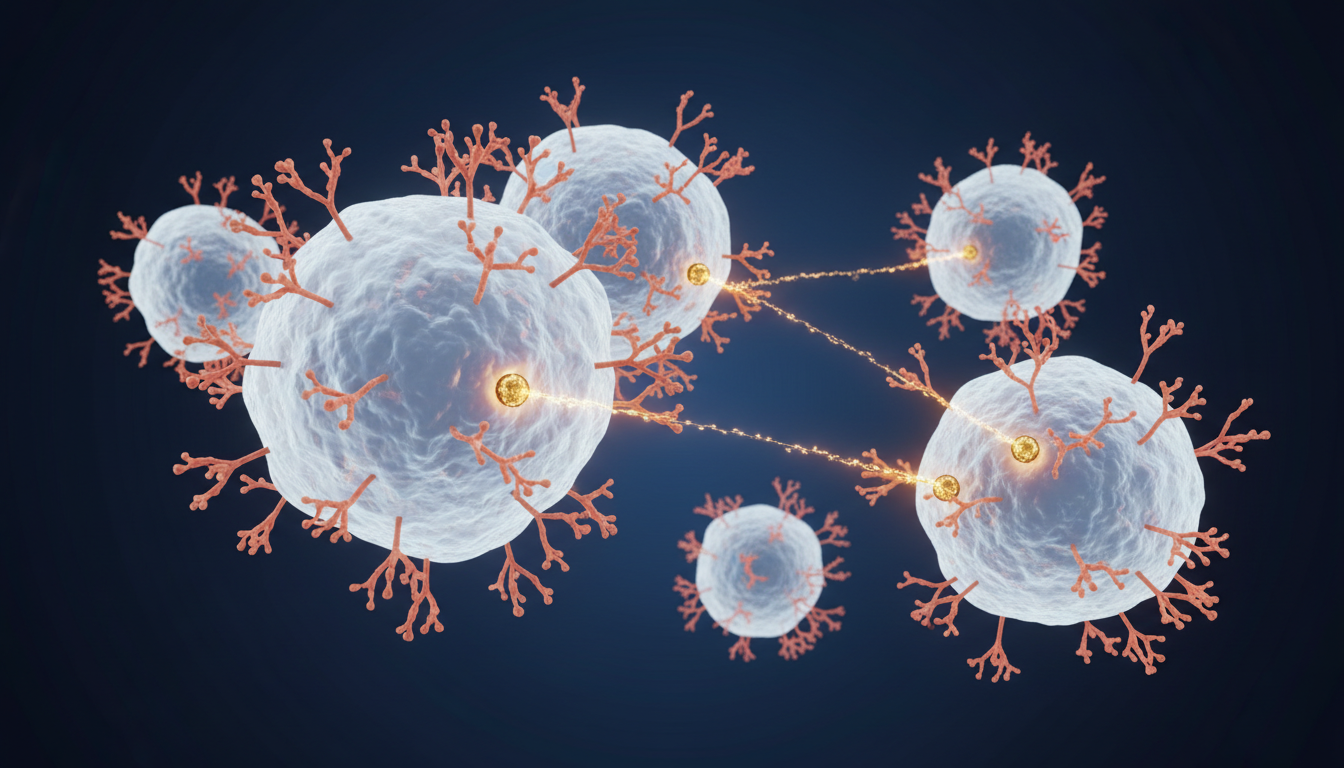
Prostate cancer is the most common cancer in men. Most cases are found early and grow slowly, but for men whose cancer has spread, the outlook has changed dramatically. Expert reviews in 2026 note that median survival for men with newly diagnosed metastatic, hormone-sensitive prostate cancer has moved from three or four years to well over five years, and many men live far longer. This article explains how prostate cancer is treated today, the German invention that transformed imaging and treatment, and the trials reported in 2025.
Early-Stage Prostate Cancer
Many low-risk prostate cancers never threaten life, and active surveillance, regular monitoring rather than immediate treatment, spares men the side effects of surgery and radiation. Higher-risk cancers are treated with surgery or radiation, often combined with hormone therapy. Accurate staging is essential, and that is where PSMA imaging comes in.
PSMA: A German Invention That Changed Everything
Most prostate cancer cells carry large amounts of a surface protein called prostate-specific membrane antigen, or PSMA. Researchers at the German Cancer Research Center in Heidelberg designed small molecules that seek out PSMA. Attached to a weak radioactive tracer, they light up prostate cancer anywhere in the body on a PSMA PET scan, finding spread that conventional CT and bone scans miss. Attached to a stronger radioactive particle, lutetium-177, the same kind of molecule delivers radiation directly to the cancer cells. The Heidelberg team published the design of PSMA-617, the molecule now used worldwide for treatment, in 2015,1 and German university hospitals were the first to use it in patients.
Metastatic Prostate Cancer
Hormone-sensitive disease
Prostate cancer depends on testosterone. Standard treatment combines androgen deprivation therapy, which lowers testosterone, with a newer androgen receptor pathway inhibitor such as abiraterone, enzalutamide, apalutamide or darolutamide, sometimes with docetaxel chemotherapy. In 2025, three major trials added targeted options for specific groups of men:
PSMA therapy earlier. In the PSMAddition trial, presented at the European Society for Medical Oncology congress in October 2025, adding lutetium-177 PSMA-617 to hormone therapy delayed progression in men with PSMA-positive cancer. Overall survival showed a favorable trend but was not yet mature.2
PTEN-deficient cancer. In the CAPItello-281 trial, also presented in October 2025, adding the targeted drug capivasertib to abiraterone in men whose tumors had lost the PTEN protein extended median radiographic progression-free survival to 33.2 months, compared with 25.7 months.3
DNA repair mutations. In the AMPLITUDE trial, adding the PARP inhibitor niraparib to abiraterone delayed progression in men whose cancers carried DNA repair gene mutations, with the greatest benefit in BRCA2 mutations.4
Castration-resistant disease
Eventually most metastatic prostate cancers learn to grow despite low testosterone. In the VISION trial, lutetium-177 PSMA-617 extended median overall survival to 15.3 months, compared with 11.3 months, in men whose cancer had progressed after hormone therapy and chemotherapy.5 In the final results of the TALAPRO-2 trial, reported in 2025, adding the PARP inhibitor talazoparib to enzalutamide as first treatment for castration-resistant disease extended overall survival.6
The Tests That Open the Most Options
Every man with metastatic prostate cancer benefits from inherited genetic testing and tumor sequencing for DNA repair mutations such as BRCA2, a PTEN test on the tumor tissue, and a PSMA PET scan. These results now decide which of the newer drugs fit. See our article on tumor DNA and RNA sequencing.
Protecting the Body During Hormone Therapy
Long-term hormone therapy causes weight gain, insulin resistance, loss of muscle and bone, fatigue and increased heart risk. Protecting the heart and metabolism is part of good care for men on this treatment.
Metformin. In the STAMPEDE trial, published in 2025, metformin did not significantly improve overall survival, but it clearly protected men from the metabolic damage caused by hormone therapy. See our article on metformin and cancer.
Exercise. Combined resistance and aerobic exercise counters the fatigue, muscle loss and weight gain of hormone therapy, and bone-strengthening drugs reduce fractures.
Diet. Some prostate cancers prefer fat as fuel, which matters for anyone considering a high-fat ketogenic diet. See our article on the ketogenic diet and cancer.
How Cancer Expert MD Helps
Cancer Expert MD specializes in education and consultation for people with Stage IV and metastatic cancer. A consultation reviews records and test results, identifies testing that could open new options, and explains treatments and trials in the United States and abroad. When treatment stops working, our guide to what to do next explains the steps. Our book, The New Reality of Cancer, covers testing and treatment across all cancers.
Frequently Asked Questions
What is PSMA therapy for prostate cancer?
A treatment that attaches radioactive lutetium-177 to a molecule that seeks out the PSMA protein on prostate cancer cells, delivering radiation directly to the cancer wherever it has spread.
How long can you live with metastatic prostate cancer?
It varies widely, but with current treatment median survival for newly diagnosed hormone-sensitive metastatic disease is now well over five years, and many men live much longer.
What genetic tests matter in prostate cancer?
Inherited and tumor testing for DNA repair mutations such as BRCA2, and a PTEN test on tumor tissue. These decide eligibility for PARP inhibitors and capivasertib.
Does hormone therapy affect the heart?
It can raise weight, blood sugar and cholesterol and increase heart risk, which is why exercise, metabolic monitoring and in some men metformin are worth attention.

About the author. Dr. Silver, MD, graduated from Temple University School of Medicine, trained as an interventional cardiologist, and has practiced medicine for nearly fifty years. A lymphoma survivor of about twenty-five years, he is co-author, with Dr. Lindmeier, DHSc, of The New Reality of Cancer: The Science of Recovery. Read more about Dr. Silver, MD.
Research by Dr. Lindmeier, DHSc, cancer educator and co-author of The New Reality of Cancer.
More articles on cancer types and all articles.
References
- Benešová M, Schäfer M, Bauder-Wüst U, et al. Preclinical evaluation of a tailor-made DOTA-conjugated PSMA inhibitor with optimized linker moiety for imaging and endoradiotherapy of prostate cancer. Journal of Nuclear Medicine. 2015;56(6):914–920.
- [177Lu]Lu-PSMA-617 in metastatic androgen pathway modulator-sensitive prostate cancer (PSMAddition). The Lancet. 2026; first presented at the ESMO Congress 2025.
- Capivasertib plus abiraterone in PTEN-deficient metastatic hormone-sensitive prostate cancer: CAPItello-281 phase III study. ESMO Congress 2025.
- AMPLITUDE: niraparib plus abiraterone acetate and prednisone in homologous recombination repair-altered metastatic castration-sensitive prostate cancer. ASCO Annual Meeting 2025.
- Sartor O, de Bono J, Chi KN, et al. Lutetium-177–PSMA-617 for metastatic castration-resistant prostate cancer (VISION). New England Journal of Medicine. 2021;385(12):1091–1103.
- Talazoparib plus enzalutamide in men with metastatic castration-resistant prostate cancer: final overall survival results from the randomised, placebo-controlled, phase 3 TALAPRO-2 trial. 2025.
This article is for education only. It is not medical advice and does not diagnose or treat any condition. Cancer Expert MD has no financial relationship with any laboratory, drug maker, supplement company, clinic or hospital.