
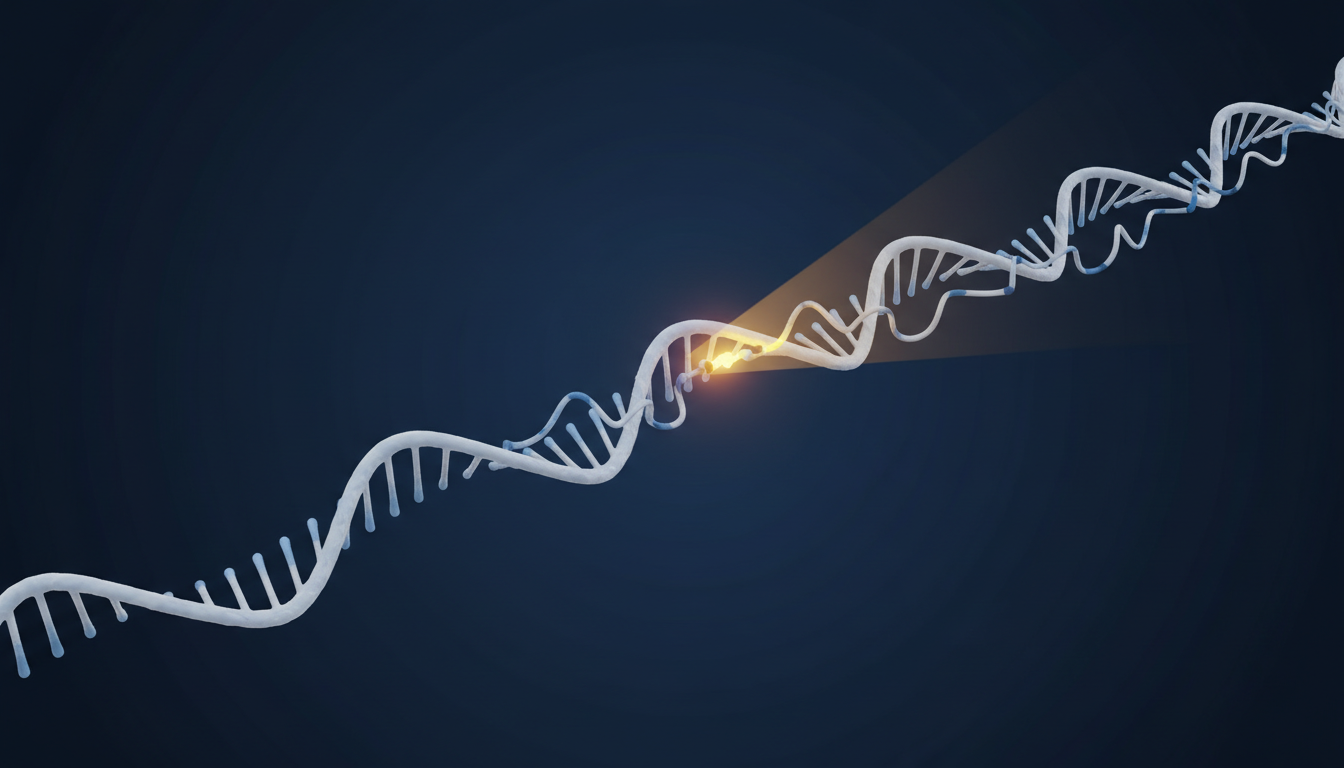
Tumor sequencing, also called genomic profiling or next-generation sequencing, reads the genes inside a cancer to find the mutations driving it. For many cancers today, the result decides which targeted drug or immunotherapy a patient receives. But a sequencing report is only as complete as the test that produced it. Different tests read very different amounts of the cancer’s genetic material, and some kinds of target can only be seen with RNA, not DNA. This article explains the main types of tumor sequencing, why one test can miss what another finds, and what the newest research shows.
The Main Types of Tumor Sequencing
Hotspot tests check a handful of well-known mutations in a few genes, such as EGFR or KRAS. They are fast and inexpensive but see very little.
Comprehensive panels read several hundred cancer genes at once. They also report two important overall measures: tumor mutational burden (how many mutations the cancer carries) and microsatellite instability, both of which help predict response to immunotherapy. Most commercial tumor profiling tests are panels of this kind.
Whole-exome and whole-genome sequencing read all of the genes, or the entire genome, rather than a pre-chosen list. They are more expensive and take longer to interpret, but they can find unusual targets a panel was never designed to look for.
RNA sequencing reads the messages the cancer’s genes are actively producing. This shows which genes are switched on, and it detects gene fusions directly.
Why RNA Matters: Fusions Hidden From DNA Tests
A gene fusion occurs when two genes break and join together, creating a hybrid gene that drives the cancer. Fusions involving genes such as ALK, ROS1, RET, NTRK and NRG1 can be treated with highly effective targeted drugs. But the breaks often fall in long, repetitive stretches of DNA that DNA panels read poorly, so a DNA test can miss them entirely.
Researchers at Memorial Sloan Kettering tested this directly. In lung adenocarcinomas where DNA sequencing had found no driver mutation at all, RNA sequencing found a treatable kinase fusion in about one in seven.1 For those patients, the difference between a DNA-only test and DNA plus RNA was the difference between “no target found” and a targeted drug.
The international WINTHER trial, led by European centers including Gustave Roussy in France and Vall d’Hebron in Spain, added RNA analysis to DNA sequencing and showed that RNA could identify treatment options for patients whose cancers had no actionable DNA mutation.2
The German MASTER Program: Reading Everything
Germany’s national cancer research centers, led by the National Center for Tumor Diseases in Heidelberg and Dresden, run the MASTER program for patients with rare cancers or advanced cancers diagnosed at a young age. Instead of a panel, MASTER uses whole-genome or whole-exome sequencing together with RNA sequencing, and a national molecular tumor board reviews every case weekly. The first 1,310 patients, published in 2021, showed that this comprehensive analysis produced treatment recommendations for most patients and benefited many who received the recommended therapy.3
In 2025, the MASTER team re-sequenced the same tumors with a broad commercial-style panel to compare the two approaches. About half of the treatment recommendations were the same with both tests. But about one-third of the recommendations from whole-genome and RNA sequencing depended on findings the panel could not detect.4
What European Guidelines Recommend
The European Society for Medical Oncology recommends routine multigene sequencing for patients with several advanced cancers, including lung, prostate, ovarian and bile duct cancers, and its 2024 update extended these recommendations to further cancer types.5
Questions to Ask About Any Sequencing Report
Was RNA tested, or only DNA? A “no actionable mutation” result from a DNA-only panel does not rule out a fusion.
How many genes were read? A hotspot test and a 500-gene panel are not the same test.
Was normal tissue compared? Comparing the tumor with a blood sample separates mutations in the cancer from inherited ones, such as BRCA or Lynch syndrome mutations, which matter for treatment and for family members.
How old is the sample? Cancers evolve under treatment. A biopsy from years ago may not reflect the cancer today. A ctDNA blood test can show new mutations, and circulating tumor cell testing can reveal targets, such as HER2, that the original biopsy did not show.
Sequencing and Functional Testing Together
Sequencing tells you what a cancer is built from. Chemosensitivity testing tells you what actually happens when a drug reaches the cancer’s cells. The two answer different questions, and the strongest plans use both. Our book, The New Reality of Cancer, explains how to read a sequencing report, how to organize treatment around the cancer’s driver pathways, and where to find comprehensive testing worldwide.
Frequently Asked Questions
What is the difference between DNA and RNA tumor sequencing?
DNA sequencing reads the cancer’s genes and finds mutations. RNA sequencing reads the active messages those genes produce, which reveals gene fusions and which genes are switched on.
Can a DNA test miss a treatable target?
Yes. In lung adenocarcinomas with no driver found by DNA sequencing, RNA sequencing found a treatable fusion in about one in seven.
Is whole-genome sequencing better than a panel?
It reads more. In a 2025 German comparison, about one-third of the treatment recommendations from whole-genome and RNA sequencing relied on findings a broad panel could not detect.
Should sequencing be repeated?
Cancers change under treatment, so results from an old biopsy may be out of date. Blood-based tests can track new changes without another biopsy.

About the author. Dr. Silver, MD, graduated from Temple University School of Medicine, trained as an interventional cardiologist, and has practiced medicine for nearly fifty years. A lymphoma survivor of about twenty-five years, he is co-author, with Dr. Lindmeier, DHSc, of The New Reality of Cancer: The Science of Recovery. Read more about Dr. Silver, MD.
Research by Dr. Lindmeier, DHSc, cancer educator and co-author of The New Reality of Cancer.
This article is for general education only and is not individual medical advice. Always consult your own doctor before making any changes to your care.
© 2026 Cancer Expert MD, Dr. Silver, MD, and Dr. Lindmeier, DHSc. All rights reserved. This article draws on the research in The New Reality of Cancer and may not be copied, republished or distributed without written permission.
For more in-depth information on this topic and many others, get our book, The New Reality of Cancer: The Science of Recovery.
More articles on advanced cancer testing and all articles.
References
- Benayed R, Offin M, Mullaney K, et al. High yield of RNA sequencing for targetable kinase fusions in lung adenocarcinomas with no mitogenic driver alteration detected by DNA sequencing and low tumor mutation burden. Clinical Cancer Research. 2019;25(15):4712–4722.
- Rodon J, Soria JC, Berger R, et al. Genomic and transcriptomic profiling expands precision cancer medicine: the WINTHER trial. Nature Medicine. 2019;25(5):751–758.
- Horak P, Heining C, Kreutzfeldt S, et al. Comprehensive genomic and transcriptomic analysis for guiding therapeutic decisions in patients with rare cancers. Cancer Discovery. 2021;11(11):2780–2795.
- Translational and clinical comparison of whole genome and transcriptome to panel sequencing in precision oncology. npj Precision Oncology. 2025. doi:10.1038/s41698-024-00788-3
- Mosele MF, Westphalen CB, Stenzinger A, et al. Recommendations for the use of next-generation sequencing (NGS) for patients with advanced cancer in 2024: a report from the ESMO Precision Medicine Working Group. Annals of Oncology. 2024;35(7):588–606.
This article is for education only. It is not medical advice and does not diagnose or treat any condition. Cancer Expert MD has no financial relationship with any laboratory, drug maker, supplement company, clinic or hospital.
Responses
[…] molecular tumor board. Patients enter through participating German cancer centers. Our article on tumor DNA and RNA sequencing explains why this comprehensive approach finds targets that standard panels […]
[…] drug worked only once researchers used tumor sequencing to find the patients it fits, which is why tumor sequencing matters even for repurposed drugs. Second, aspirin is not risk-free: serious side effects, mainly […]
[…] Comprehensive sequencing may reveal other targets and qualify patients for trials. See our article on tumor DNA and RNA sequencing. […]
[…] HER2 status can change between the original tumor and metastases, so a biopsy of a metastasis, when possible, confirms the target. Blood tests add a further view: in the German DETECT III trial, HER2 found on circulating tumor cells guided successful HER2-targeted treatment even when the original tumor was HER2-negative. See our articles on circulating tumor cell testing and tumor sequencing. […]
[…] HER2 and other targets open additional options, and the side of the colon where the tumor began also affects which drugs work best. See our article on tumor DNA and RNA sequencing. […]
[…] Tumor sequencing, including RNA. The small group of pancreatic cancers without a KRAS mutation often carry other targets, such as gene fusions involving NRG1 or NTRK, which have highly effective targeted drugs and are best found with RNA sequencing. See our article on tumor DNA and RNA sequencing. […]
[…] folate receptor alpha for mirvetuximab, PD-L1 for pembrolizumab, and HER2. See our articles on tumor DNA and RNA sequencing and liquid […]
[…] Full tumor sequencing. DNA and RNA sequencing can find targets such as BRAF V600E mutations and gene fusions, which have effective targeted drugs, and EGFR changes that newer cell therapies attack. See our article on tumor DNA and RNA sequencing. […]
[…] pills such as dabrafenib with trametinib, or encorafenib with binimetinib. See our articles on tumor sequencing and liquid […]
[…] Testing the tumor guides treatment. The key markers are HER2, which has targeted drugs; PD-L1, which predicts benefit from immunotherapy; MSI, which predicts a strong response to immunotherapy; and Claudin 18.2, a protein found in many stomach cancers that is the target of the drug zolbetuximab. See our article on tumor DNA and RNA sequencing. […]
[…] In the Dutch-led PORTEC-3 trial, when researchers in Leiden sorted women by these groups, the benefit of adding chemotherapy to radiation was concentrated in those with p53-abnormal tumors.1 European trials now assign treatment by molecular group. Testing for HER2 is also important in the serous type. See our article on tumor sequencing. […]
[…] An endoscopy with biopsy confirms the diagnosis and the type. An endoscopic ultrasound shows how deeply the cancer has grown, and a PET-CT scan checks for spread. Tumor testing for HER2, PD-L1, MSI and Claudin 18.2 guides treatment, especially in advanced disease. See our article on tumor sequencing. […]
[…] when a biopsy is not possible, and can show how the drivers change over time. See our articles on tumor DNA and RNA sequencing and ctDNA liquid […]
[…] Every man with metastatic prostate cancer benefits from inherited genetic testing and tumor sequencing for DNA repair mutations such as BRCA2, a PTEN test on the tumor tissue, and a PSMA PET scan. These results now decide which of the newer drugs fit. See our article on tumor DNA and RNA sequencing. […]
[…] Comprehensive sequencing. If earlier testing was a small panel or DNA only, broader testing that includes RNA may find targets that were missed, such as gene fusions with highly effective targeted drugs. See our article on tumor DNA and RNA sequencing. […]
[…] and targeted drugs, and full sequencing can reveal other treatable changes. See our articles on tumor DNA and RNA sequencing, how immunotherapy works and uterine […]