
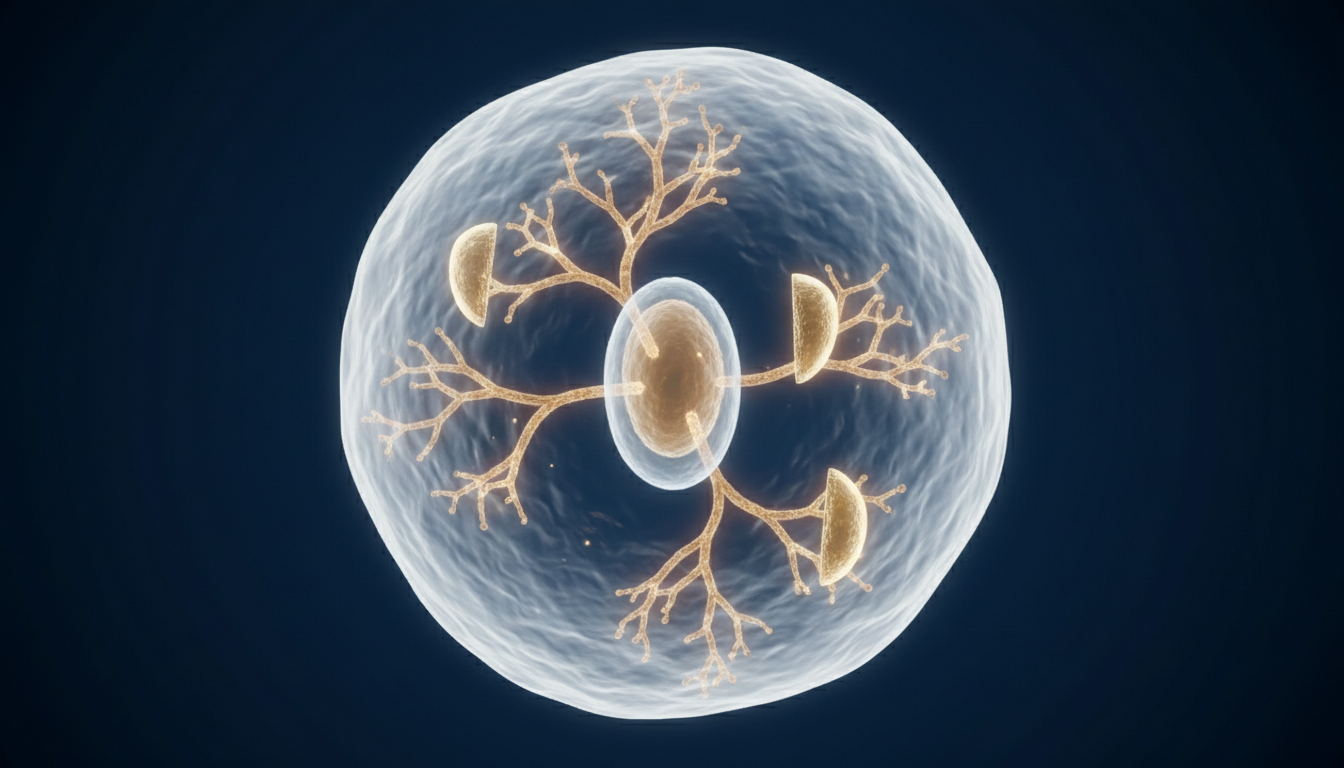
Cancer cells grow out of control because a few of their internal signaling pathways are stuck in the “on” position. These are the driver pathways: chains of molecules that carry messages from the surface of the cell to its center, telling it to grow, divide, survive and spread. Every cancer has its own pattern of drivers, even among people with the same type of cancer. Knowing which pathways drive a particular cancer is one of the most powerful ways to choose treatment.
Part of our guide: Advanced Cancer Testing: A Guide to the Tests Beyond Standard Scans
The Main Driver Pathways
PI3K/AKT/mTOR. This pathway controls growth and how the cell uses sugar for fuel. It is overactive in many breast, colorectal, endometrial and other cancers. Drugs that block it include alpelisib, inavolisib, capivasertib and everolimus. In the INAVO120 trial, adding inavolisib to standard treatment in PIK3CA-mutated breast cancer more than doubled the time before the cancer grew, to 15 months from 7.3 months.1 Metformin and berberine act on this pathway indirectly through an energy sensor called AMPK.
RAS/RAF/MEK/ERK. This growth pathway is switched on by mutations in KRAS, NRAS and BRAF, common in pancreatic, colorectal, lung cancer and melanoma. KRAS G12C inhibitors such as sotorasib and adagrasib, and BRAF and MEK inhibitors such as encorafenib, dabrafenib and trametinib, block it. In the BREAKWATER trial, led by Spanish investigators, encorafenib, cetuximab and chemotherapy roughly doubled survival in BRAF-mutated colorectal cancer, to 30.3 months from 15.1 months.2
EGFR and HER2. These growth-signal receptors on the cell surface drive many lung, breast, stomach and colorectal cancers. Osimertinib blocks EGFR in lung cancer; trastuzumab and trastuzumab deruxtecan target HER2.
NF-κB and JAK/STAT. These inflammation pathways help cancer cells survive and resist treatment. Curcumin and aspirin act on NF-κB, and ruxolitinib blocks JAK.
Hedgehog, Wnt and Notch. These developmental pathways are reawakened in many cancers and in cancer stem cells. Vismodegib blocks Hedgehog in basal cell carcinoma, and the antifungal drug itraconazole also blocks it.
Blood vessel growth and DNA repair. Tumors send VEGF signals to grow new blood vessels, blocked by bevacizumab. Cancers with BRCA mutations have broken DNA repair, which PARP inhibitors such as olaparib exploit.
Want to know which pathways drive your cancer? We can help.
With nearly 50 years of experience, Dr. Silver, MD, explains conventional and integrative options, so you can make informed decisions with your treating team.
REQUEST A CONSULTATIONHow the Drivers Are Found
Sequencing the tumor’s DNA and RNA reveals its driver mutations and which pathways are overactive. A blood test for tumor DNA can do the same when a biopsy is not possible, and can show how the drivers change over time. See our articles on tumor DNA and RNA sequencing and ctDNA liquid biopsy.
The German MASTER Program
In the MASTER program of the German Cancer Consortium, centered in Heidelberg and Dresden, 1,310 people with advanced and rare cancers had their tumors fully sequenced and reviewed by a molecular tumor board. Treatment recommendations based on driver pathways were made for 88 percent of patients. Among those who received the matched treatment, about one in three stayed free of progression substantially longer than on their previous treatment.3
Why Blocking More Than One Pathway Matters
When one pathway is blocked, cancer cells often reroute their signals through another, which is a major reason targeted drugs stop working. BREAKWATER worked because it blocked BRAF and the EGFR escape route at the same time. A pathway result can also point to a simple, inexpensive option: in the Nordic ALASCCA trial, low-dose aspirin roughly halved recurrence in colorectal cancers with PI3K pathway changes.4 See our articles on preventing metastasis, our guide to repurposed drugs, metformin and curcumin.
How Cancer Expert MD Helps
Cancer Expert MD provides education and consultation for people with every type and stage of cancer, and specializes in Stage IV and metastatic cancer. Our book, The New Reality of Cancer, has a full chapter on cancer pathways, covering each major pathway, how to test for it, and the targeted drugs, repurposed drugs and natural compounds that block it.
Frequently Asked Questions
What is a cancer driver pathway?
A chain of signaling molecules inside the cell that is stuck in the “on” position, telling the cancer to grow, survive and spread. Each cancer has its own pattern of drivers.
How do I find out which pathways drive my cancer?
Through sequencing of the tumor’s DNA and RNA, or a blood test for tumor DNA when a biopsy is not possible.
Why do targeted drugs stop working?
Cancer cells often reroute their signals through another pathway. Blocking the escape route at the same time, as in the BREAKWATER trial, can overcome this.
Can inexpensive drugs block cancer pathways?
Some can. Low-dose aspirin halved recurrence in PI3K-altered colorectal cancer, and metformin, itraconazole and curcumin act on other pathways.

About the author. Dr. Silver, MD, graduated from Temple University School of Medicine, completed fellowship training in cardiology, and has practiced medicine for nearly fifty years. A lymphoma survivor of about twenty-five years, he is co-author, with Dr. Lindmeier, DHSc, of The New Reality of Cancer: The Science of Recovery. Read more about Dr. Silver, MD.
Research by Dr. Lindmeier, DHSc, cancer educator and co-author of The New Reality of Cancer.
This article is for general education only and is not individual medical advice. Always consult your own doctor before making any changes to your care.
© 2026 Lovely LYF LLC. All rights reserved. This article draws on the research in The New Reality of Cancer and may not be copied, republished or distributed without written permission.
For more in-depth information on this topic and many others, get our book, The New Reality of Cancer: The Science of Recovery.
Explore our guides: Stage 4 Cancer Options · Advanced Cancer Testing · Integrative Cancer Treatment Options · Natural Compounds and Cancer · Repurposed Drugs for Cancer · Cancer Treatment by Type
More articles on all topics.
References
- Turner NC, Im SA, Saura C, et al. Inavolisib-based therapy in PIK3CA-mutated advanced breast cancer (INAVO120). New England Journal of Medicine. 2024;391(17):1584–1596.
- Elez E, et al. Encorafenib, cetuximab, and mFOLFOX6 in BRAF V600E-mutated metastatic colorectal cancer (BREAKWATER). New England Journal of Medicine. 2025.
- Horak P, Heining C, Kreutzfeldt S, et al. Comprehensive genomic and transcriptomic analysis for guiding therapeutic decisions in patients with rare cancers (MASTER). Cancer Discovery. 2021;11(11):2780–2795.
- Martling A, et al. Low-dose aspirin for PI3K-altered localized colorectal cancer (ALASCCA). New England Journal of Medicine. 2025.
This article is for education only. It is not medical advice and does not diagnose or treat any condition. Cancer Expert MD has no financial relationship with any laboratory, drug maker, supplement company, clinic or hospital.
Leave a Reply